
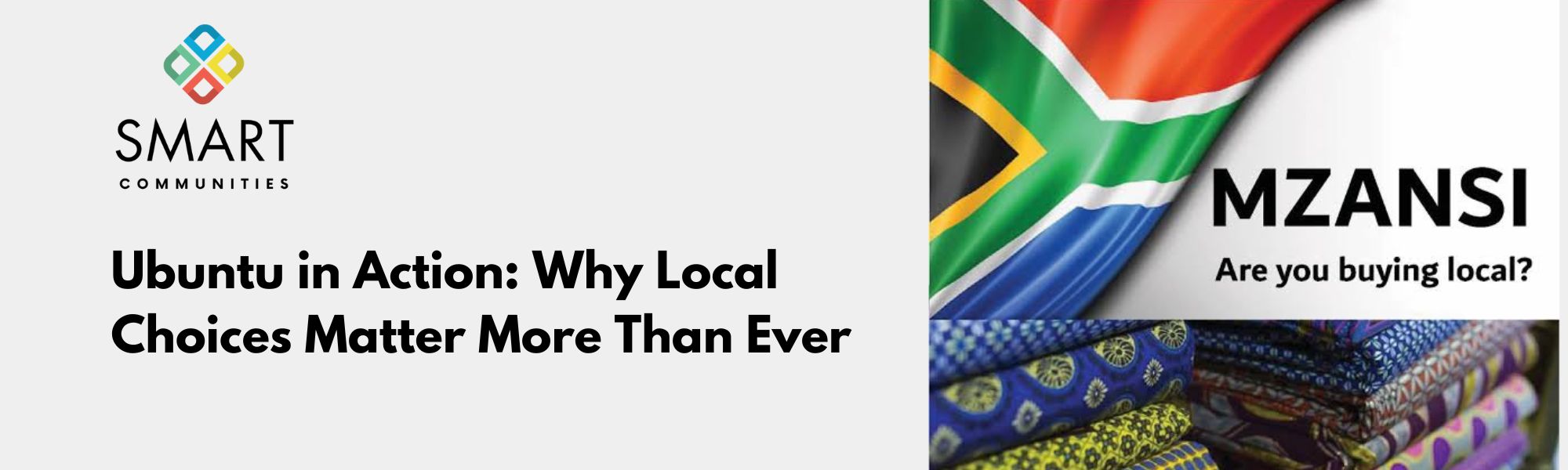
Reclaiming Connection by Choosing Local
At the heart of every South African community is a simple desire: to belong, to feel safe, and to know that we matter to one another. Yet so often, that desire is redirected into spending into bigger baskets, busier malls, and brands that know our data but not our names. Especially during the festive season, when shopping centres overflow while many families quietly juggle school fees, rising food costs, and the reality of January around the corner.
But connection was never meant to be bought. It is built slowly, locally, and through people who share the same streets, power cuts, water issues, and hopes for the future.
This is where supporting local businesses becomes more than an economic choice. It becomes a personal one.
Local businesses are not abstract entities. They are your neighbour who runs a spaza shop and keeps an eye on the street. The woman who bakes from home and employs two others from nearby. The mechanic who stays late so you can get to work the next morning. The barber who knows your children by name. These businesses don’t just operate in the community, they live as part of it.
Because they live here, they care differently.
They notice when rubbish piles up, when a streetlight is broken, when a corner feels unsafe. A cleaner, safer area isn’t just good for business but because it’s good for their children, their elders, and their own peace of mind. That’s why local businesses often invest back into their surroundings: fixing up shopfronts, supporting local security efforts, sponsoring school events, contributing to community clean-ups, or helping a neighbour in tough times.
When you support local, your money doesn’t leave the area and vanish into distant systems. It stays close. It moves hand to hand, from business owner to employee, from supplier to household, from one local need to another. That circulation builds resilience. It creates small safety nets that quietly hold communities together when times are hard.
South Africa has always understood this, even before it had a name. Long before online carts and loyalty points, value was created in informal markets, family-run shops, small farms, tailors, hair salons, repair stalls, and traders who built relationships before profits. These were, and still are, places of trust, dignity, and shared survival.
Today, many people are instinctively returning to this way of living. Choosing simpler celebrations. Sharing meals instead of gifts. Buying from someone they know instead of a brand they don’t. These choices may seem small, but they are powerful. They rebuild trust. They keep skills alive. They remind us that prosperity is not just about growth, but about care.
Choosing Local Is Choosing Yourself
Buying local isn’t about nostalgia or rejecting progress. It’s about strengthening what already holds us up.
In a country facing unemployment, rising living costs, and strained infrastructure, supporting local businesses is one of the most immediate ways to support yourself and those around you. Strong local economies create jobs close to home, reduce pressure on distant cities, and allow young people to imagine a future without having to leave their communities behind.
Communities with thriving local businesses feel different. People greet one another. They look out for each other. There is accountability, care, and a shared sense that “this place is ours.”
That is what Smart Communities are built on.
Not endless consumption, but mutual investment. Not extraction, but circulation. Not faceless systems, but human relationships.
Local businesses are not outdated, they are essential infrastructure. With the right support, tools, and trust, they don’t just survive; they anchor communities, protect environments, and keep value rooted where it belongs.
When you choose local, for food, services, or gifts, you are not just spending money.
You are investing in safer streets.
Cleaner environments.
Stronger relationships.
And a future that includes you.
That is the power of supporting local.
That is the heart of Smart Communities in South Africa.
How useful was this post?
Click on a star to rate it!
Average rating 5 / 5. Vote count: 4
No votes so far! Be the first to rate this post.